


Consumption : The Price Fever Finally Subsides in Cameroon as 2026 Begins
Dernière mise à jours il y'a 8 moisThe specter of the high cost of living is finally beginning to retreat, releasing Cameroonian households from a financial vice that once seemed indestructible. In this month of January 2026, market stalls tell a story that statistical curves have just confirmed: the great surge is behind us. According to the latest Monthly Note on Price Evolution from the National Institute of Statistics (NIS), the country ended the 2025 fiscal year with an inflation rate of 3.4%. This is not merely a figure; it is a psychological and economic victory.
Lire aussi : FINACEP CAMEROUN SA : Agilité, proximité et expansion en 2026
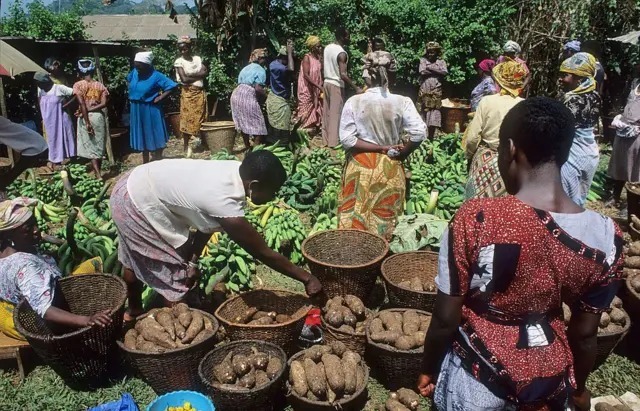
After flirting with dizzying heights in 2023, the price trajectory has finally begun its descent, placing Yaoundé just a stone's throw from the CEMAC convergence threshold. The psychosis of the 1994 devaluation, whose shadow still loomed over the records of 2022, is fading in favor of a long-awaited normalization.
The month of December 2025 acted as the catalyst for this renewal with a monthly decline of 0.1%, driven by a 0.8% decrease in food products. This is a first since the beginning of the previous year and a sign that logistical circuits have finally regained their fluidity. This easing is explained by better availability of basic commodities, indicating that policies supporting local production and the stabilization of transport costs are beginning to bear fruit. For the government, the objective is now clear: to drop back below the critical 3% mark as early as this year 2026, thus reconnecting with a monetary orthodoxy lost since 2021.
However, this national improvement hides contrasting territorial realities, revealing a multi-speed geography of purchasing power. While Maroua emerges as the top performer with an inflation rate contained at 2.2%, other cities such as Bamenda and Ngaoundéré still face pressures with a rate of 4.5%. Between these two extremes, Yaoundé (3.7%) and Douala (3.2%) navigate a gray zone, where urban transport costs and the specificities of supply chains maintain a certain price resistance. These disparities serve as a reminder that the battle against inflation is also won on the ground through regional market regulation and infrastructure for opening up remote areas.
Despite these gaps, the global trend remains one of successful convalescence. The shift from 7.4% in 2023 to 3.4% in 2025 testifies to the remarkable resilience of the Cameroonian economy in the face of external shocks. For investors and consumers alike, this return to calm signals rediscovered visibility. As 2026 opens under better auspices, the challenge will be to transform this technical disinflation into a concrete and lasting improvement in the standard of living, ensuring that price stability is not just a statistical parenthesis, but the foundation of a rediscovered inclusive growth.
CK

bernardo carlos ndjomo
Commentaire(s) du post
Articles similaires








Floyd Miles
Actually, now that I try out the links on my message, above, none of them take me to the secure site. Only my shortcut on my desktop, which I created years ago.